Luca & Adi: A Conversation About Responsibility
- Luca és Adi

- May 15, 2025
- 3 min read
– Adi: Responsibility sometimes feels like being called on in a massive video call: “Adi, what do you think?” And you weren’t paying attention – your kid just lost their ball behind the couch – but suddenly all eyes are on you. (Not that this ever happened to me, of course – purely hypothetical. 😄) It’s not stressful because you couldn’t handle it, but because you didn’t initiate it. You were just dropped into it without warning.
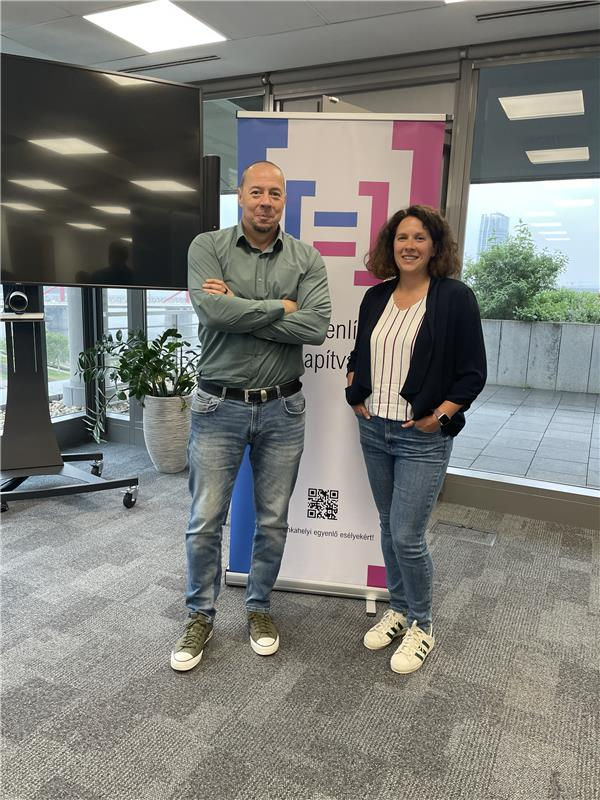
– Luca: Yep, for me it often feels like I’m acting on multiple stages at once – as a mother, a leader, a human being – and I’m expected to take the lead role on all of them. And while I’m trying to show up everywhere, I rarely stop to ask myself if I even have the energy for the next scene. It’s not always the amount of responsibility that’s overwhelming – it’s trying to carry it all at once.
– Adi: This hits especially hard at work. The feedback loops are faster, expectations can be unclear, and mistakes often have more visible consequences. It’s not always external pressure – we often put that weight on ourselves. But it still makes a difference whether you chose the task, or it just landed on your lap.
– Luca: That’s why I had to learn to separate things. To ask: what is truly my job – and what am I just holding onto because I feel responsible, even if I’m not the best person to do it? This applies as a leader, as a parent, and even as a friend. Because if you take on everything you possibly can, eventually something will slip – and people won’t see your overcommitment, just the failure to deliver.
– Adi: Oh yes, I know that one. What’s helped me is making a conscious effort to pick tasks I genuinely connect with – ones that make sense to me, that feel meaningful. Then the responsibility doesn’t feel heavy. It becomes something I want to shape. And if I’m going to carry it, I also want clarity: What’s expected? What are the risks? What’s my scope? And if something changes – I say so. That’s it.
– Luca: For me, the turning point was learning to let go of control. For a long time, I thought everything had to go through me – that I had to see and oversee it all. But that’s a fast track to burnout. Now I focus on distributing responsibility – on purpose.
– Adi: And to do that, communication has to be clear. If you accept a task but don’t know exactly what’s expected, misunderstandings happen fast. And the same goes the other way: if you delegate something without explaining the outcome you’re aiming for, it’s hard for the other person to succeed. Saying, “Just get something for dinner” rarely ends in pizza.
– Luca: One of my all-time favorite metaphors. You totally stole it from me – admit it! 😄 Here’s what helps me: Openness – accepting that others may do it differently than I would, and that’s okay. Trust – acknowledging that someone else might be better at a task than I am. And clarity – not just “get it done,” but “this is the result I’m looking for.” When these three are in place, responsibility becomes lighter – because it’s shared in a meaningful way.
– Adi: And when that dynamic works, it’s not just the weight that’s distributed – trust builds too. As a leader, I really value when someone doesn’t just execute but also thinks ahead, makes suggestions, asks questions. That’s when I know they don’t just carry the task – they own the responsibility.
– Luca: And after a while, it’s not even about responsibility anymore – it’s about how we function. Whether we’re actually present in our work. Whether we’re sensing, connecting, communicating – not just ticking boxes.
– Adi: Exactly. It’s not about carrying everything – it’s about knowing what we can carry well, and how to share the load before it becomes too much. Responsibility isn’t just about execution – it’s about direction. And staying human in the process.
– Luca:
To me, that’s our greatest responsibility:
Knowing when to draw the line.
Being able to ask for help.
Letting go of the need to do it all ourselves.
Because strength doesn’t come from doing everything alone – it comes from knowing how to share what we carry. Wisely. Humanly.


Comments